Proximie
Services
Product Design UX / UI Product Strategy Co-creation Concept Design
Description
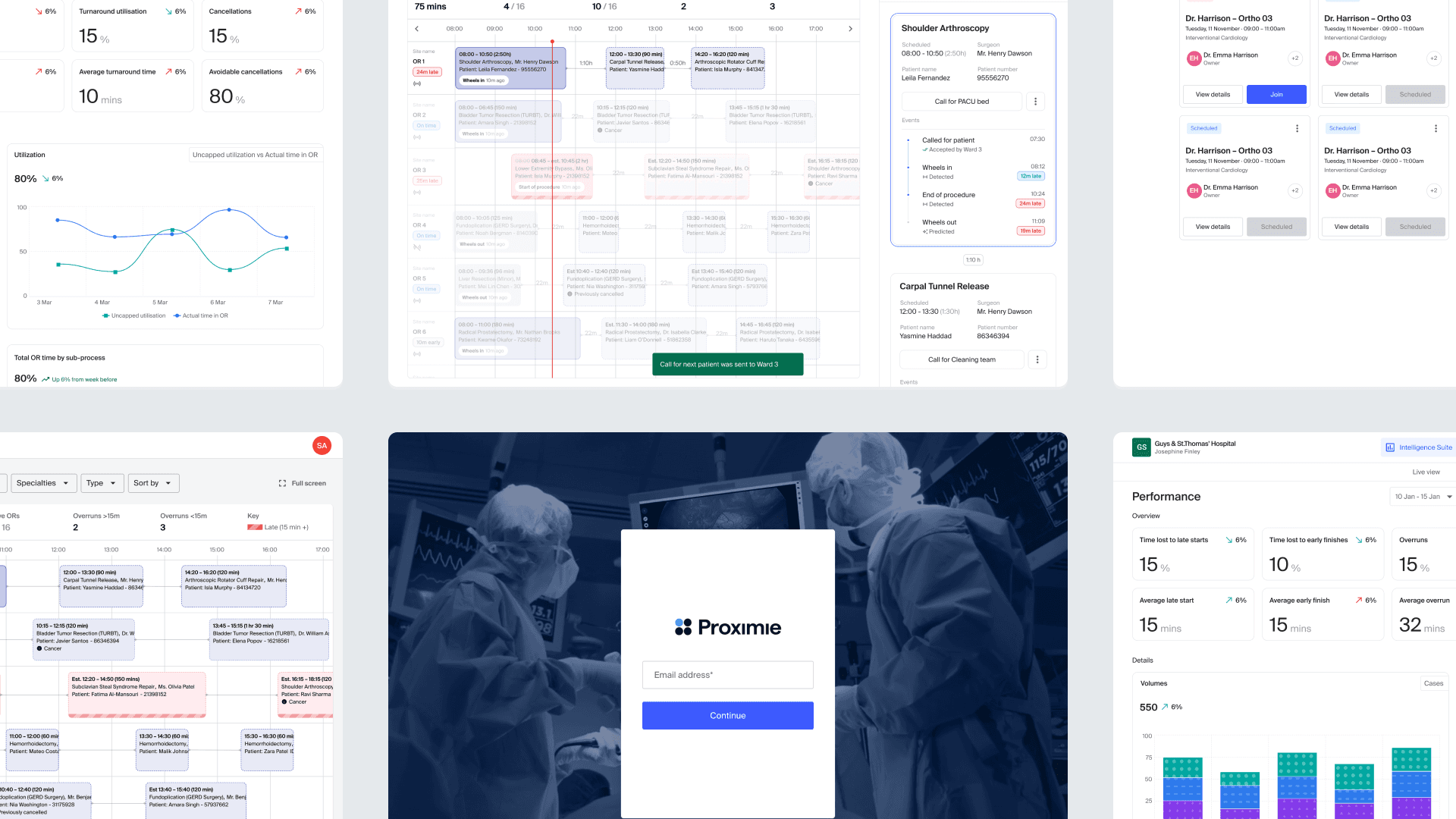
Proximie connects surgeons and specialists to operating rooms anywhere in the world via telepresence. Getting into a live session took 15 clicks and up to five minutes. We redesigned the session flow, cut that time by 84%, and were retained to lead the next phase of OR intelligence development.
Services
Product Design UX / UI Product Strategy Co-creation Concept Design
Description
Proximie connects surgeons and specialists to operating rooms anywhere in the world via telepresence. Getting into a live session took 15 clicks and up to five minutes. We redesigned the session flow, cut that time by 84%, and were retained to lead the next phase of OR intelligence development.
Year
Timeline
6 months
Location
London, UK

Overview
Proximie, a leader in operating room telepresence, was hamstrung by design debt.
Specifically, login and starting a new remote session to allow participants to join surgeries remotely was was cumbersome, requiring 15 clicks and up to 5 minutes to start a session. Our objective was to shorten this to less than 60 seconds.
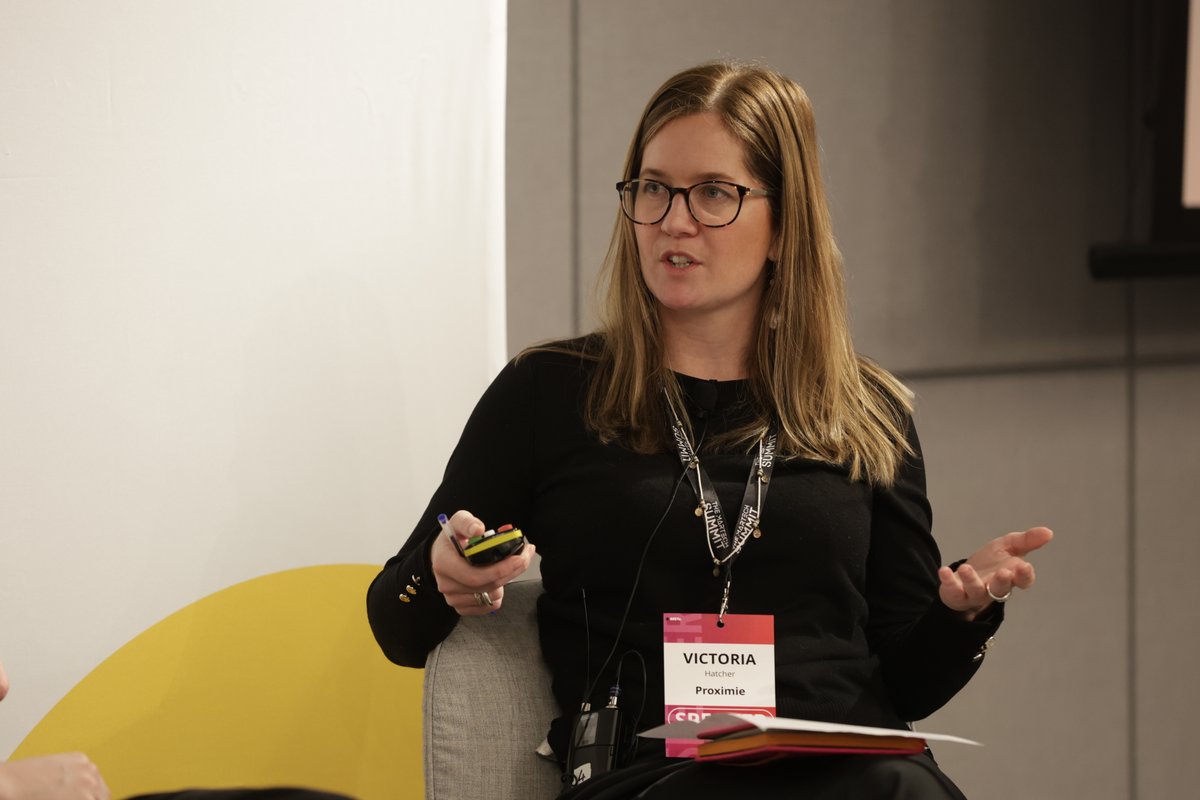
"After evaluating several agencies, Mustard Navy stood out for their thoughtful and practical approach. They met us exactly where we were as a scale-up, while bringing the expertise you'd expect from a team working with large corporates."
Victoria Hatcher, VP Global Marketing & Sales

Challenge
Starting a live session took 15 clicks and up to five minutes, in an environment where delay is never just inconvenient.
The login and session-setup flow had been built incrementally, and it showed. A surgeon wanting to join a live procedure remotely had to navigate a process that assumed they were planning ahead, not responding in real time. The design debt in the core flow needed clearing before any of the roadmap's more ambitious features could land well.

Approach
Early research with Proximie's Customer Success team surfaced the insight that changed the design direction: almost no one was scheduling sessions in advance.
The platform's setup flow defaulted to scheduling for the future. Once that assumption was tested, the whole architecture of the flow could be reoriented around what people actually did: start a session immediately, in the room, right now. Technical constraints and the legal and security requirements for broadcasting live surgical procedures had to be brought into the design process from the start. Working with Proximie's legal and technical teams from the earliest stages meant the final flow was something that could actually ship.

Impact
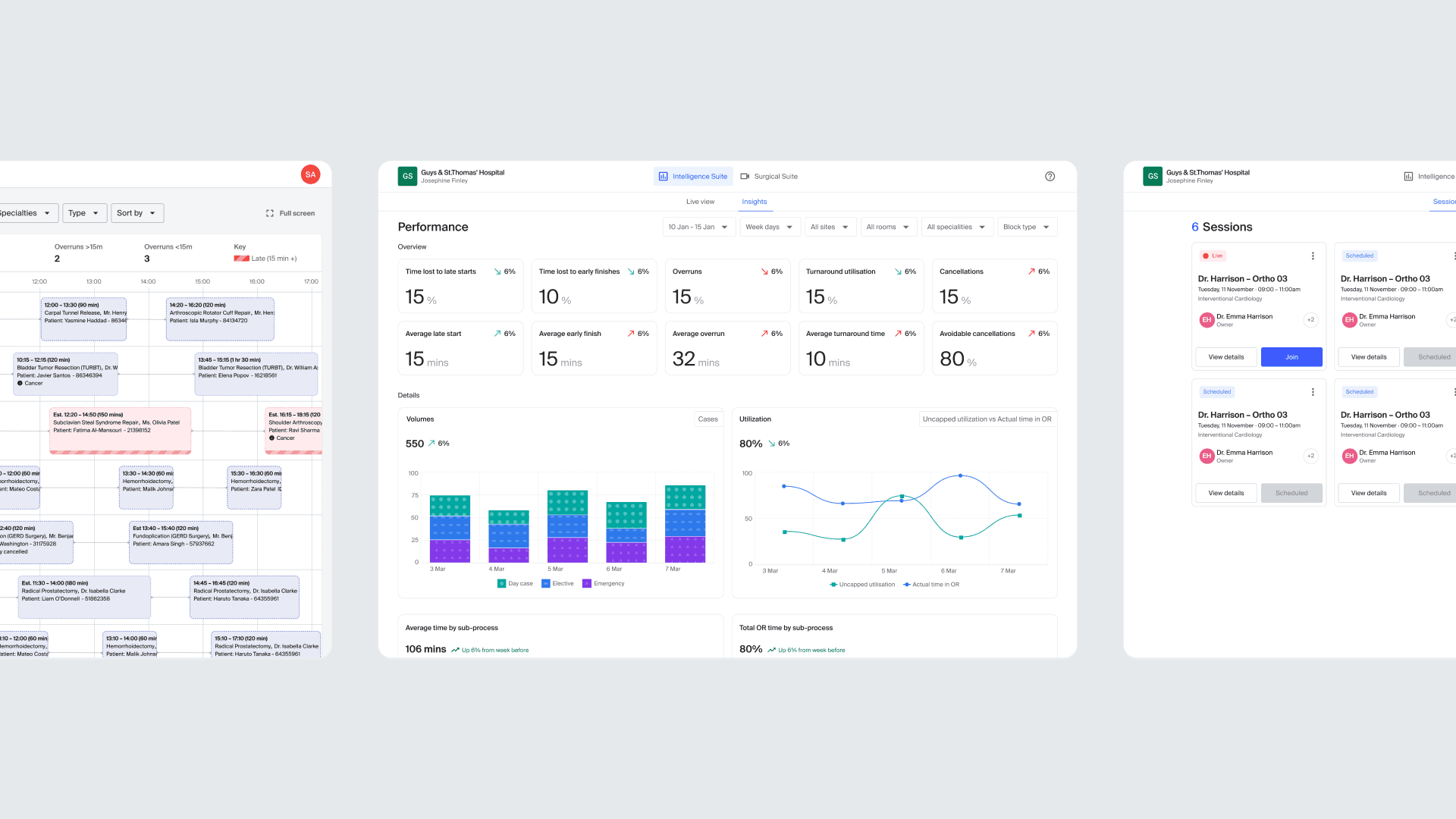
Proximie reduced session start time by 84% and retained MN to lead design on the next generation of operating room intelligence features.
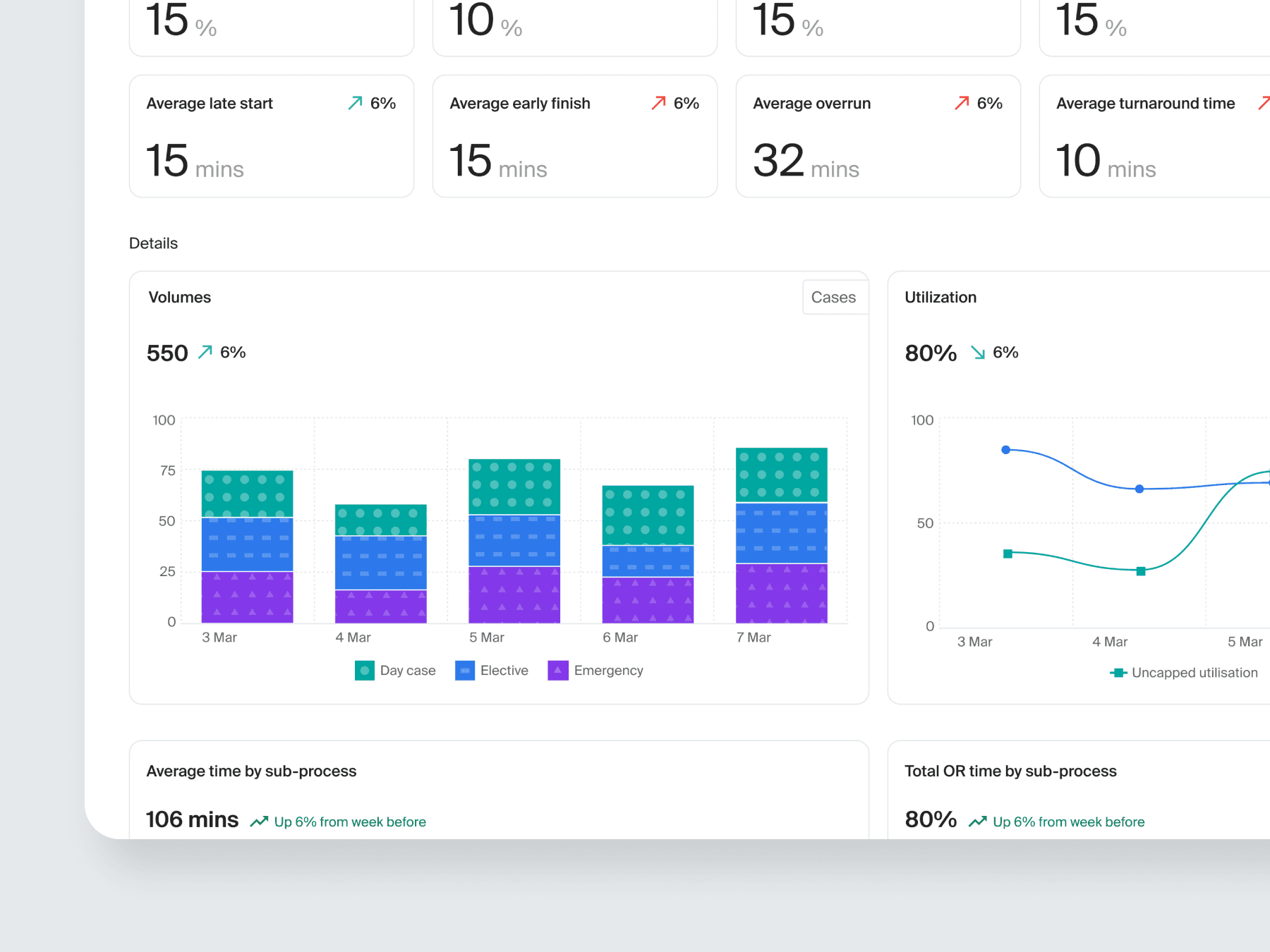
What had taken 15 clicks and up to five minutes can now be done in under 60 seconds. Two new capabilities, in computer vision and hospital efficiency, were added within six months. The engagement expanded into predictive analytics and event quantification. The original assumption, that sessions were planned in advance, was proven wrong, and correcting it was one of the most valuable changes the project created.

Overview
Proximie, a leader in operating room telepresence, was hamstrung by design debt.
Specifically, login and starting a new remote session to allow participants to join surgeries remotely was was cumbersome, requiring 15 clicks and up to 5 minutes to start a session. Our objective was to shorten this to less than 60 seconds.
"After evaluating several agencies, Mustard Navy stood out for their thoughtful and practical approach. They met us exactly where we were as a scale-up, while bringing the expertise you'd expect from a team working with large corporates."
Victoria Hatcher, VP Global Marketing & Sales
Challenge
Starting a live session took 15 clicks and up to five minutes, in an environment where delay is never just inconvenient.
The login and session-setup flow had been built incrementally, and it showed. A surgeon wanting to join a live procedure remotely had to navigate a process that assumed they were planning ahead, not responding in real time. The design debt in the core flow needed clearing before any of the roadmap's more ambitious features could land well.
Approach
Early research with Proximie's Customer Success team surfaced the insight that changed the design direction: almost no one was scheduling sessions in advance.
The platform's setup flow defaulted to scheduling for the future. Once that assumption was tested, the whole architecture of the flow could be reoriented around what people actually did: start a session immediately, in the room, right now. Technical constraints and the legal and security requirements for broadcasting live surgical procedures had to be brought into the design process from the start. Working with Proximie's legal and technical teams from the earliest stages meant the final flow was something that could actually ship.
Impact
Proximie reduced session start time by 84% and retained MN to lead design on the next generation of operating room intelligence features.
What had taken 15 clicks and up to five minutes can now be done in under 60 seconds. Two new capabilities, in computer vision and hospital efficiency, were added within six months. The engagement expanded into predictive analytics and event quantification. The original assumption, that sessions were planned in advance, was proven wrong, and correcting it was one of the most valuable changes the project created.
Overview
Proximie, a leader in operating room telepresence, was hamstrung by design debt.
Specifically, login and starting a new remote session to allow participants to join surgeries remotely was was cumbersome, requiring 15 clicks and up to 5 minutes to start a session. Our objective was to shorten this to less than 60 seconds.
"After evaluating several agencies, Mustard Navy stood out for their thoughtful and practical approach. They met us exactly where we were as a scale-up, while bringing the expertise you'd expect from a team working with large corporates."
Victoria Hatcher, VP Global Marketing & Sales
Challenge
Starting a live session took 15 clicks and up to five minutes, in an environment where delay is never just inconvenient.
The login and session-setup flow had been built incrementally, and it showed. A surgeon wanting to join a live procedure remotely had to navigate a process that assumed they were planning ahead, not responding in real time. The design debt in the core flow needed clearing before any of the roadmap's more ambitious features could land well.
Approach
Early research with Proximie's Customer Success team surfaced the insight that changed the design direction: almost no one was scheduling sessions in advance.
The platform's setup flow defaulted to scheduling for the future. Once that assumption was tested, the whole architecture of the flow could be reoriented around what people actually did: start a session immediately, in the room, right now. Technical constraints and the legal and security requirements for broadcasting live surgical procedures had to be brought into the design process from the start. Working with Proximie's legal and technical teams from the earliest stages meant the final flow was something that could actually ship.
Impact
Proximie reduced session start time by 84% and retained MN to lead design on the next generation of operating room intelligence features.
What had taken 15 clicks and up to five minutes can now be done in under 60 seconds. Two new capabilities, in computer vision and hospital efficiency, were added within six months. The engagement expanded into predictive analytics and event quantification. The original assumption, that sessions were planned in advance, was proven wrong, and correcting it was one of the most valuable changes the project created.