Truestate
Services
Product Design UX / UI Data Visualisation Service Design Concept Design
Description
TrueState is making custom Generative AI solutions quick and easy to create for any business. They had the technical parts in place, but their platform wasn't user-friendly for the non-technical target audience. This meant a lot of manual work for each client, which slowed down their ability to scale and develop the platform further.
Services
Product Design UX / UI Data Visualisation Service Design Concept Design
Description
TrueState is making custom Generative AI solutions quick and easy to create for any business. They had the technical parts in place, but their platform wasn't user-friendly for the non-technical target audience. This meant a lot of manual work for each client, which slowed down their ability to scale and develop the platform further.
Year
Timeline
12 weeks
Location
Sydney, AU
50+
UX Issues diagnosed in one week
5
New client leads after one month
$1.5M
Funding raised
Introduction
TrueState could build custom GenAI solutions. The problem was that almost nobody else could.
The platform had the technical depth to create generative AI applications quickly. but it was built for engineers, not for the non-technical business audiences they were trying to reach. Every new client needed significant hands-on support from the TrueState team just to get started, which meant the platform's ability to scale was limited by the team's own capacity. The technical parts were solid. The gap was the experience built on top of them.
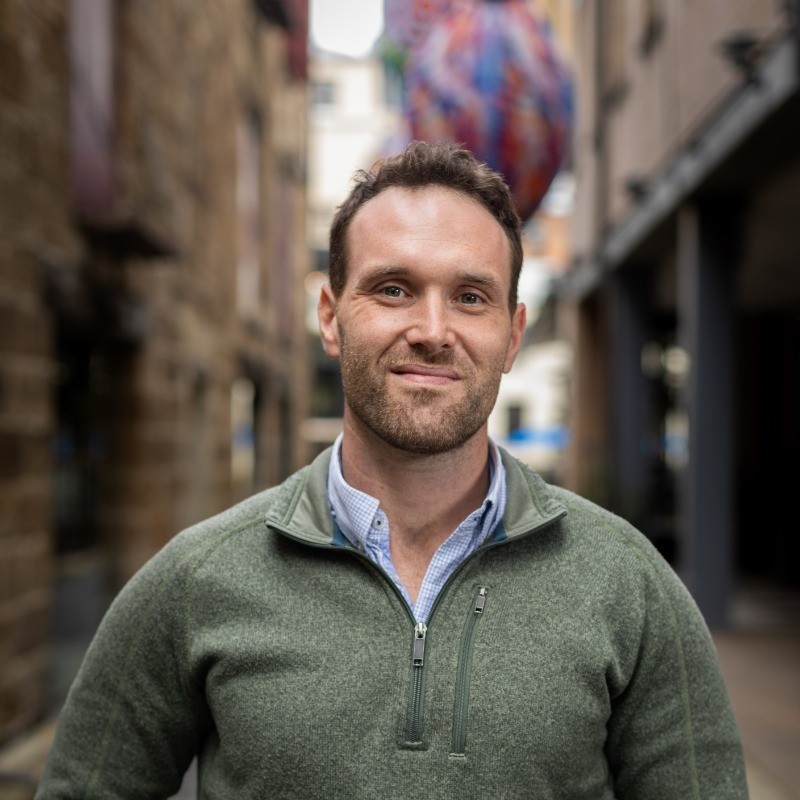
"Working with Mustard Navy nudged us further into a user-first approach, instead of a more dev-led approach. While scary at first, we quickly realised this was the way to go. We also accelerated our development timelines by focusing on what matters most to our users — simplicity."
Will Ashford, CEO, TrueState

Challenge
The platform was technically capable, but the complex interface was a barrier for non-technical audiences to engage.
For TrueState to grow, the platform needed to carry the weight of client onboarding and configuration without constant manual intervention. That meant rethinking how the product worked from the ground up while keeping existing customers served and the development pipeline moving. A wholesale rebuild wasn't an option. The change had to be incremental, deliberate, and live.

Approach
We started with surgery, not redesign.
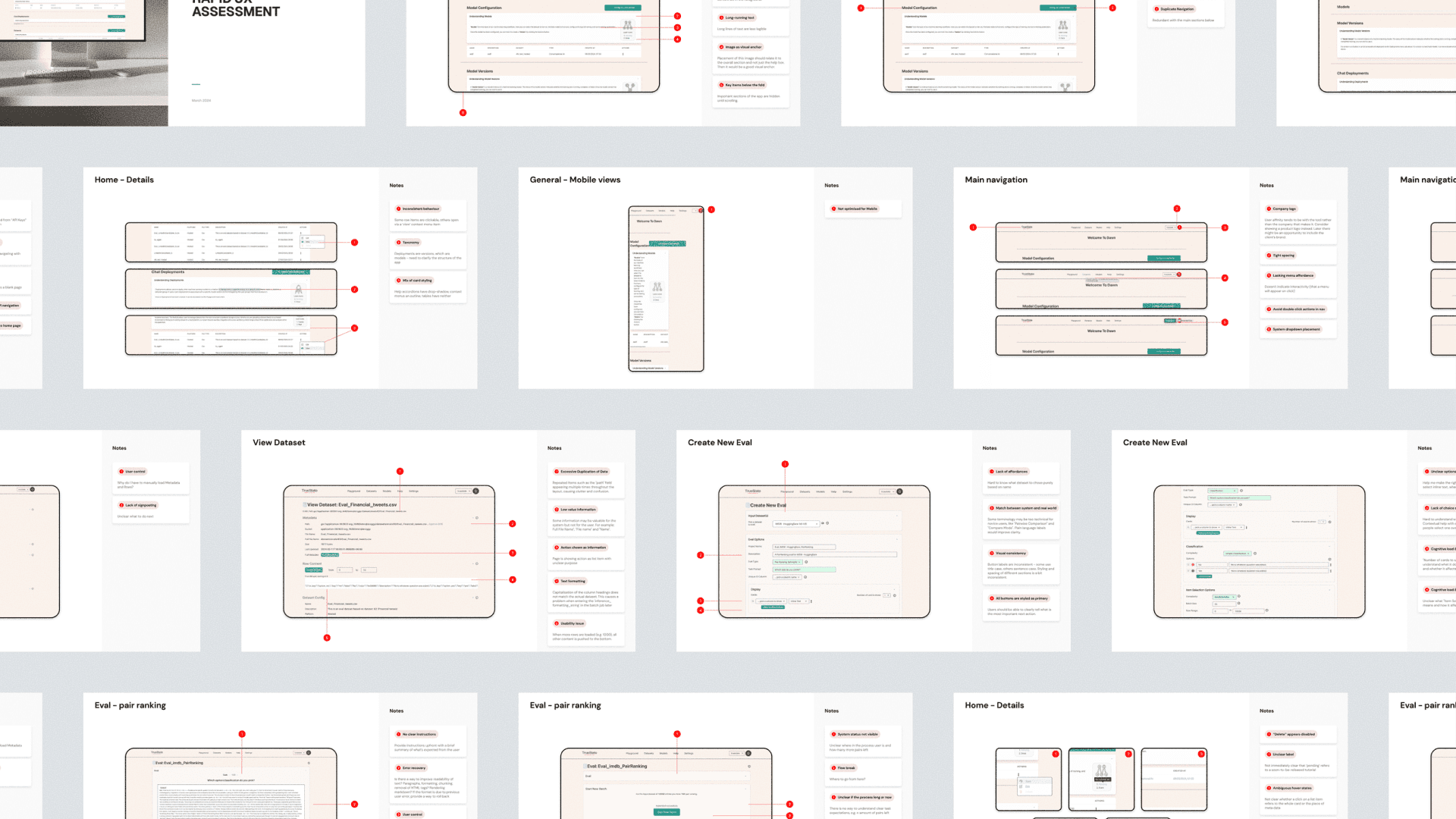
In the first week, we mapped the key user flows, diagnosed the most damaging UX problems, and identified fixes that could be shipped immediately, no major structural changes required. Establishing quick-win improvements early set the tone and gave the TrueState team a first concrete experience of what user-first thinking looked like in practice.
From there, we ran a series of workshops that shifted the team's focus away from a developer-led view of the product and towards the experience they were actually building for. Together we defined design principles, brand foundations, product terminology, and a revised set of user journeys. Eventually phasing out features that were adding complexity without adding value.
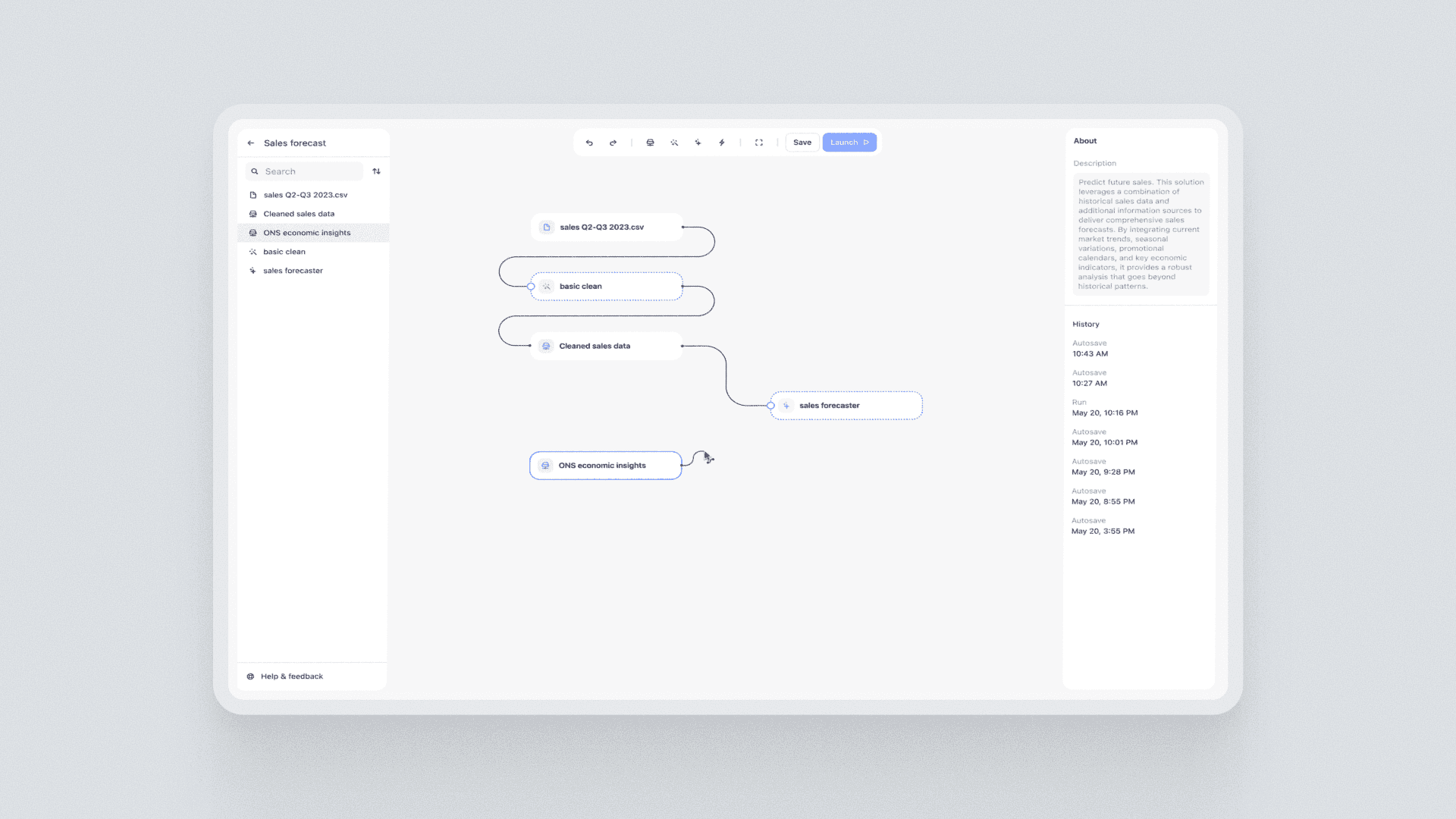
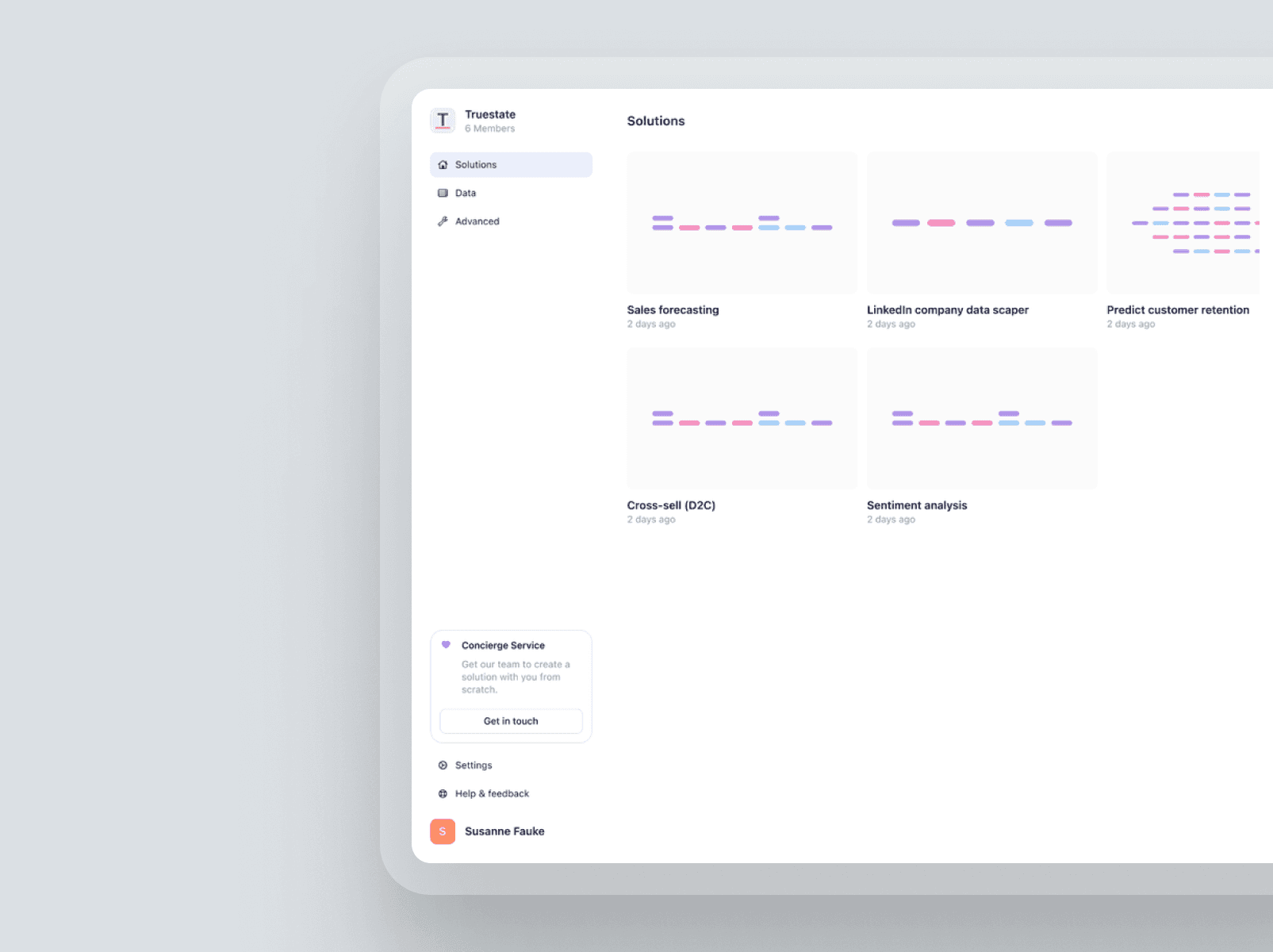
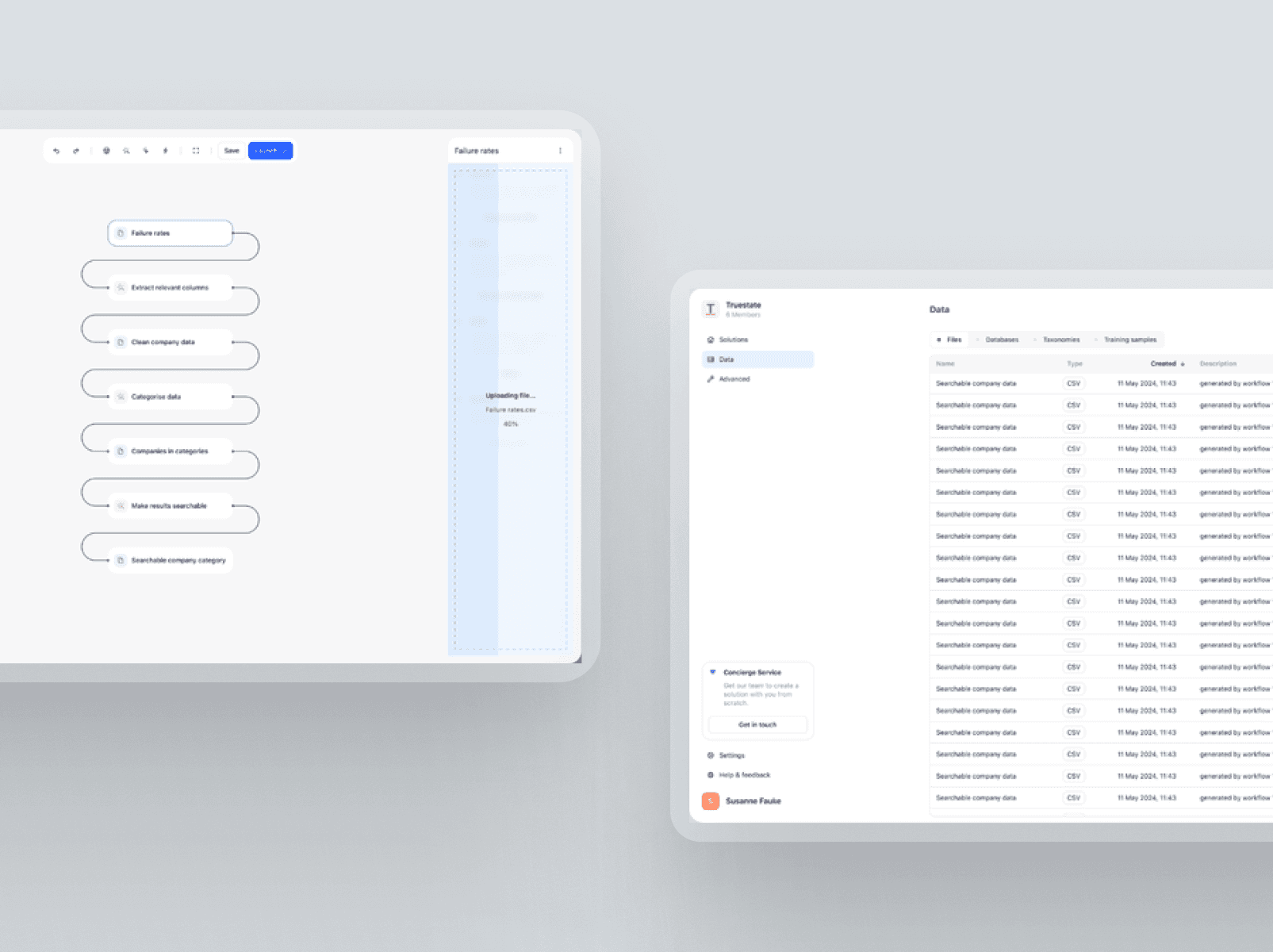
Those foundations made the larger redesign possible. We rebuilt the app around a new centrepiece: a visual canvas that lets users build and configure AI solutions through intuitive, no-code interactions. We worked through the overall vision first, then refined every interaction and edge case until the concept held together in practice, not just on paper.
TrueState's team was based on the other side of the world, so the working model mattered from day one. We adjusted our hours for live workshops in Miro, set clear written goals each week, gave the client access to all our workspaces for asynchronous feedback, and sent 10–15 minute recorded demos of weekly progress. We stayed on as a long-term partner to provide TrueState with ongoing design and product strategy support without the overhead of building an in-house team from scratch.

Impact
Fifty UX issues diagnosed in a week. Five new client leads in a month, and ultimately $1.5m raised.
Transforming the platform from tables, forms, and code-heavy interfaces to visual, no-code interactions changed what TrueState could offer. The iterative approach meant existing customers were never disrupted; the early improvements also established the practices, principles, and component patterns that accelerated every development cycle that followed.
Moving to a user-first way of working changed how the team made decisions from what to build, to where to cut, and how to prioritise. Focused thinking about users resulted in faster overall timelines and a better quality product.
50+
UX Issues diagnosed in one week
5
New client leads after one month
$1.5M
Funding raised
Introduction
TrueState could build custom GenAI solutions. The problem was that almost nobody else could.
The platform had the technical depth to create generative AI applications quickly. but it was built for engineers, not for the non-technical business audiences they were trying to reach. Every new client needed significant hands-on support from the TrueState team just to get started, which meant the platform's ability to scale was limited by the team's own capacity. The technical parts were solid. The gap was the experience built on top of them.
"Working with Mustard Navy nudged us further into a user-first approach, instead of a more dev-led approach. While scary at first, we quickly realised this was the way to go. We also accelerated our development timelines by focusing on what matters most to our users — simplicity."
Will Ashford, CEO, TrueState
Challenge
The platform was technically capable, but the complex interface was a barrier for non-technical audiences to engage.
For TrueState to grow, the platform needed to carry the weight of client onboarding and configuration without constant manual intervention. That meant rethinking how the product worked from the ground up while keeping existing customers served and the development pipeline moving. A wholesale rebuild wasn't an option. The change had to be incremental, deliberate, and live.
Approach
We started with surgery, not redesign.
In the first week, we mapped the key user flows, diagnosed the most damaging UX problems, and identified fixes that could be shipped immediately, no major structural changes required. Establishing quick-win improvements early set the tone and gave the TrueState team a first concrete experience of what user-first thinking looked like in practice.
From there, we ran a series of workshops that shifted the team's focus away from a developer-led view of the product and towards the experience they were actually building for. Together we defined design principles, brand foundations, product terminology, and a revised set of user journeys. Eventually phasing out features that were adding complexity without adding value.
Those foundations made the larger redesign possible. We rebuilt the app around a new centrepiece: a visual canvas that lets users build and configure AI solutions through intuitive, no-code interactions. We worked through the overall vision first, then refined every interaction and edge case until the concept held together in practice, not just on paper.
TrueState's team was based on the other side of the world, so the working model mattered from day one. We adjusted our hours for live workshops in Miro, set clear written goals each week, gave the client access to all our workspaces for asynchronous feedback, and sent 10–15 minute recorded demos of weekly progress. We stayed on as a long-term partner to provide TrueState with ongoing design and product strategy support without the overhead of building an in-house team from scratch.
Impact
Fifty UX issues diagnosed in a week. Five new client leads in a month, and ultimately $1.5m raised.
Transforming the platform from tables, forms, and code-heavy interfaces to visual, no-code interactions changed what TrueState could offer. The iterative approach meant existing customers were never disrupted; the early improvements also established the practices, principles, and component patterns that accelerated every development cycle that followed.
Moving to a user-first way of working changed how the team made decisions from what to build, to where to cut, and how to prioritise. Focused thinking about users resulted in faster overall timelines and a better quality product.
50+
UX Issues diagnosed in one week
5
New client leads after one month
$1.5M
Funding raised
Introduction
TrueState could build custom GenAI solutions. The problem was that almost nobody else could.
The platform had the technical depth to create generative AI applications quickly. but it was built for engineers, not for the non-technical business audiences they were trying to reach. Every new client needed significant hands-on support from the TrueState team just to get started, which meant the platform's ability to scale was limited by the team's own capacity. The technical parts were solid. The gap was the experience built on top of them.
"Working with Mustard Navy nudged us further into a user-first approach, instead of a more dev-led approach. While scary at first, we quickly realised this was the way to go. We also accelerated our development timelines by focusing on what matters most to our users — simplicity."
Will Ashford, CEO, TrueState
Challenge
The platform was technically capable, but the complex interface was a barrier for non-technical audiences to engage.
For TrueState to grow, the platform needed to carry the weight of client onboarding and configuration without constant manual intervention. That meant rethinking how the product worked from the ground up while keeping existing customers served and the development pipeline moving. A wholesale rebuild wasn't an option. The change had to be incremental, deliberate, and live.
Approach
We started with surgery, not redesign.
In the first week, we mapped the key user flows, diagnosed the most damaging UX problems, and identified fixes that could be shipped immediately, no major structural changes required. Establishing quick-win improvements early set the tone and gave the TrueState team a first concrete experience of what user-first thinking looked like in practice.
From there, we ran a series of workshops that shifted the team's focus away from a developer-led view of the product and towards the experience they were actually building for. Together we defined design principles, brand foundations, product terminology, and a revised set of user journeys. Eventually phasing out features that were adding complexity without adding value.
Those foundations made the larger redesign possible. We rebuilt the app around a new centrepiece: a visual canvas that lets users build and configure AI solutions through intuitive, no-code interactions. We worked through the overall vision first, then refined every interaction and edge case until the concept held together in practice, not just on paper.
TrueState's team was based on the other side of the world, so the working model mattered from day one. We adjusted our hours for live workshops in Miro, set clear written goals each week, gave the client access to all our workspaces for asynchronous feedback, and sent 10–15 minute recorded demos of weekly progress. We stayed on as a long-term partner to provide TrueState with ongoing design and product strategy support without the overhead of building an in-house team from scratch.
Impact
Fifty UX issues diagnosed in a week. Five new client leads in a month, and ultimately $1.5m raised.
Transforming the platform from tables, forms, and code-heavy interfaces to visual, no-code interactions changed what TrueState could offer. The iterative approach meant existing customers were never disrupted; the early improvements also established the practices, principles, and component patterns that accelerated every development cycle that followed.
Moving to a user-first way of working changed how the team made decisions from what to build, to where to cut, and how to prioritise. Focused thinking about users resulted in faster overall timelines and a better quality product.