Terralytiq
Services
Service Design Product Strategy Co-creation Workshop Faciliation Concept Design
Description
Reimagining a decarbonisation platform to cut out the middleman and finding the strategic unlock hiding in the supply chain.
Services
Service Design Product Strategy Co-creation Workshop Faciliation Concept Design
Description
Reimagining a decarbonisation platform to cut out the middleman and finding the strategic unlock hiding in the supply chain.
Year
Timeline
1 week
Location
Austin, TX, USA
+2
Client leads in the newly targeted within a month of launch
Overview
Terralytiq had a strong platform and a dependency problem.
Built to support major management consultancies on their decarbonisation engagements, Terralytiq's product was delivering value but their ability to grow was tied to a third party. They asked us to reimagine the service and product for a direct route to manufacturing businesses, and to scope out what a GenAI decarbonisation co-pilot could genuinely look like in practice.

"It's not just advice and wisdom from years in the field of AI — it's hard artefacts that continue to anchor our product development months after the project: user research and synthesis, service blueprints, design frames. If you want someone to plug in and deliver rapid impact, MN are your guys."
Will Glazener, Co-Founder and COO, Terralytiq

Challenge
Moving from B2B2B to direct-to-manufacturer was a significant shift in operating model, process and end user experience.
Serving manufacturers directly means different pain points, different buying dynamics, and a different relationship with the platform entirely. The strategy needed to be rebuilt from evidence, not assumption. At the same time, Terralytiq already had a Design Lead and a live product roadmap. The work had to break new strategic ground without disrupting everything already in motion.


Approach
We started by mapping what the client already knew, then let the research challenge it.
Working directly with Terralytiq's COO and their Design Lead, we mapped the current customer journey alongside the team's existing assumptions about where the opportunities and pain points lay. From there, we ran customer and expert interviews to understand and prioritise friction across the manufacturer journey and gauge where GenAI-enabled functionality would have real traction and where it would be noise.
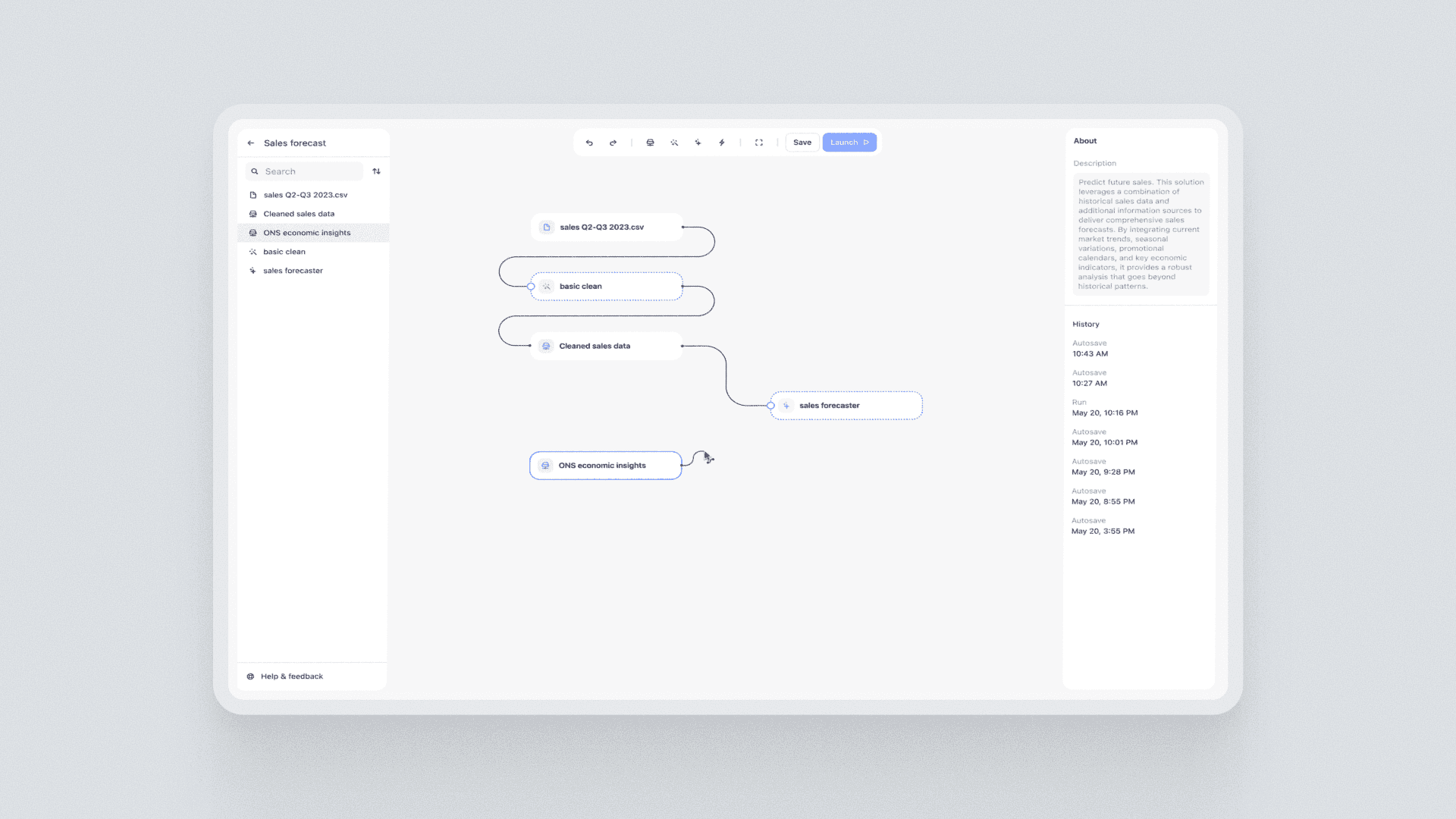
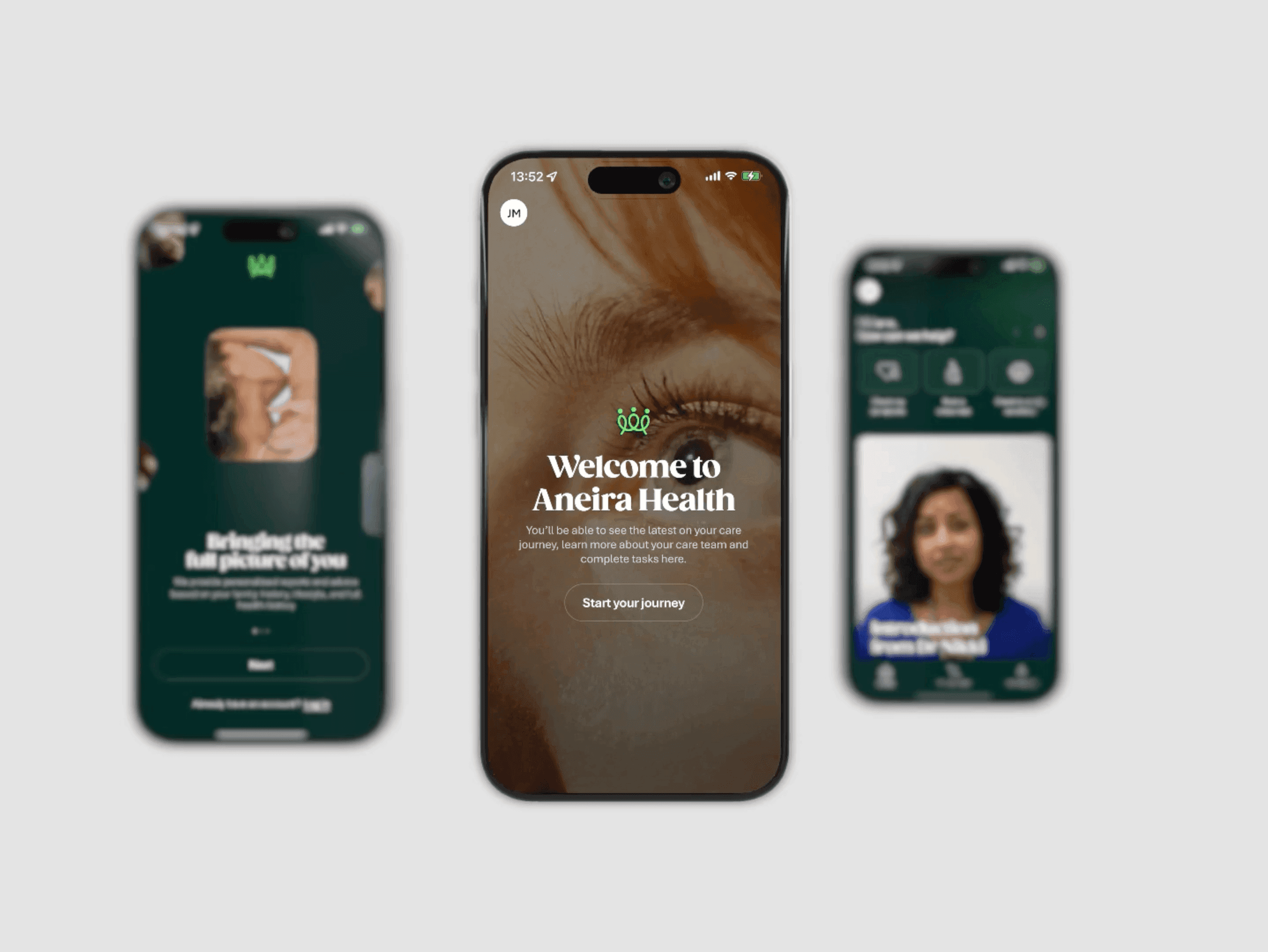
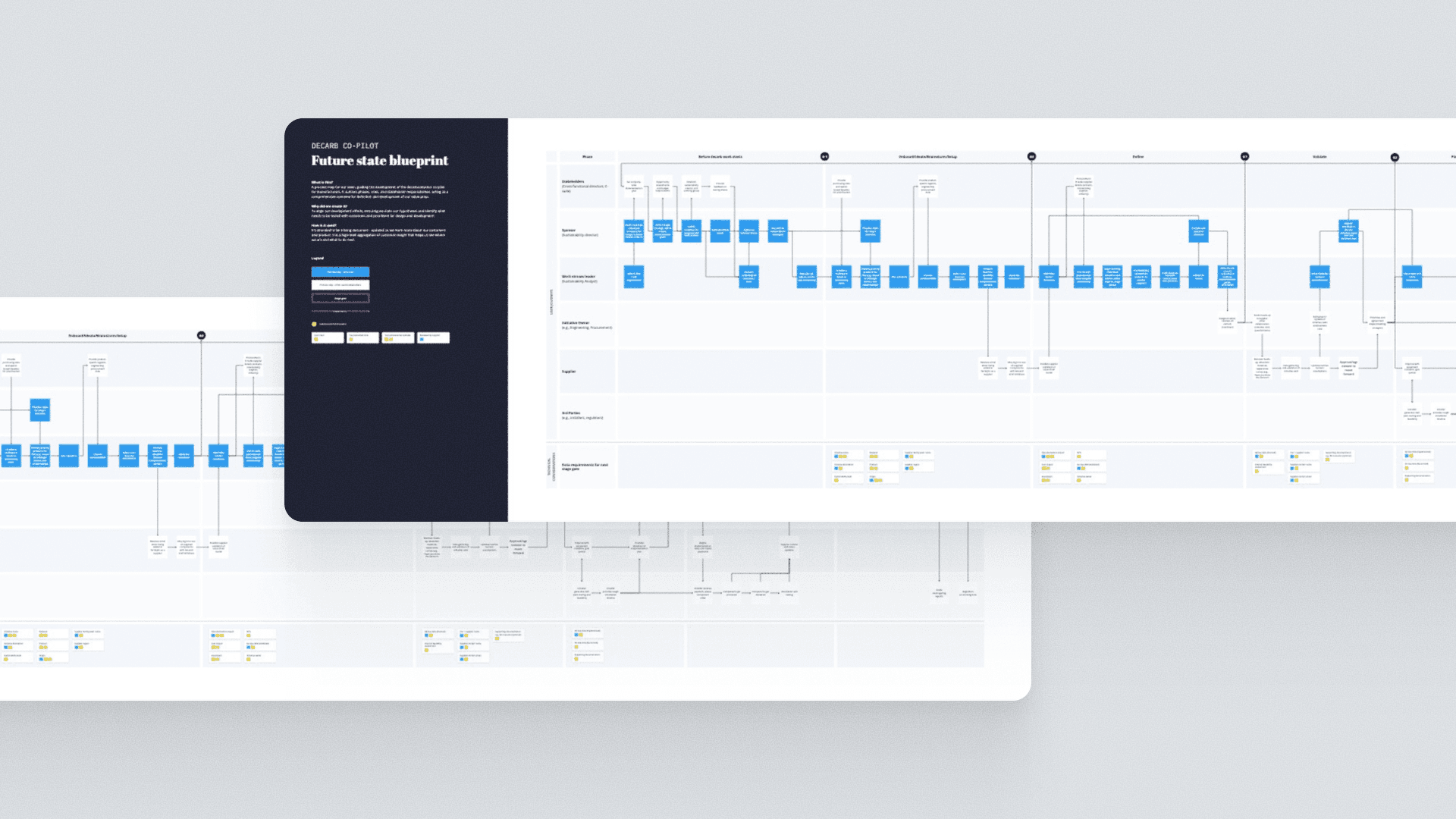
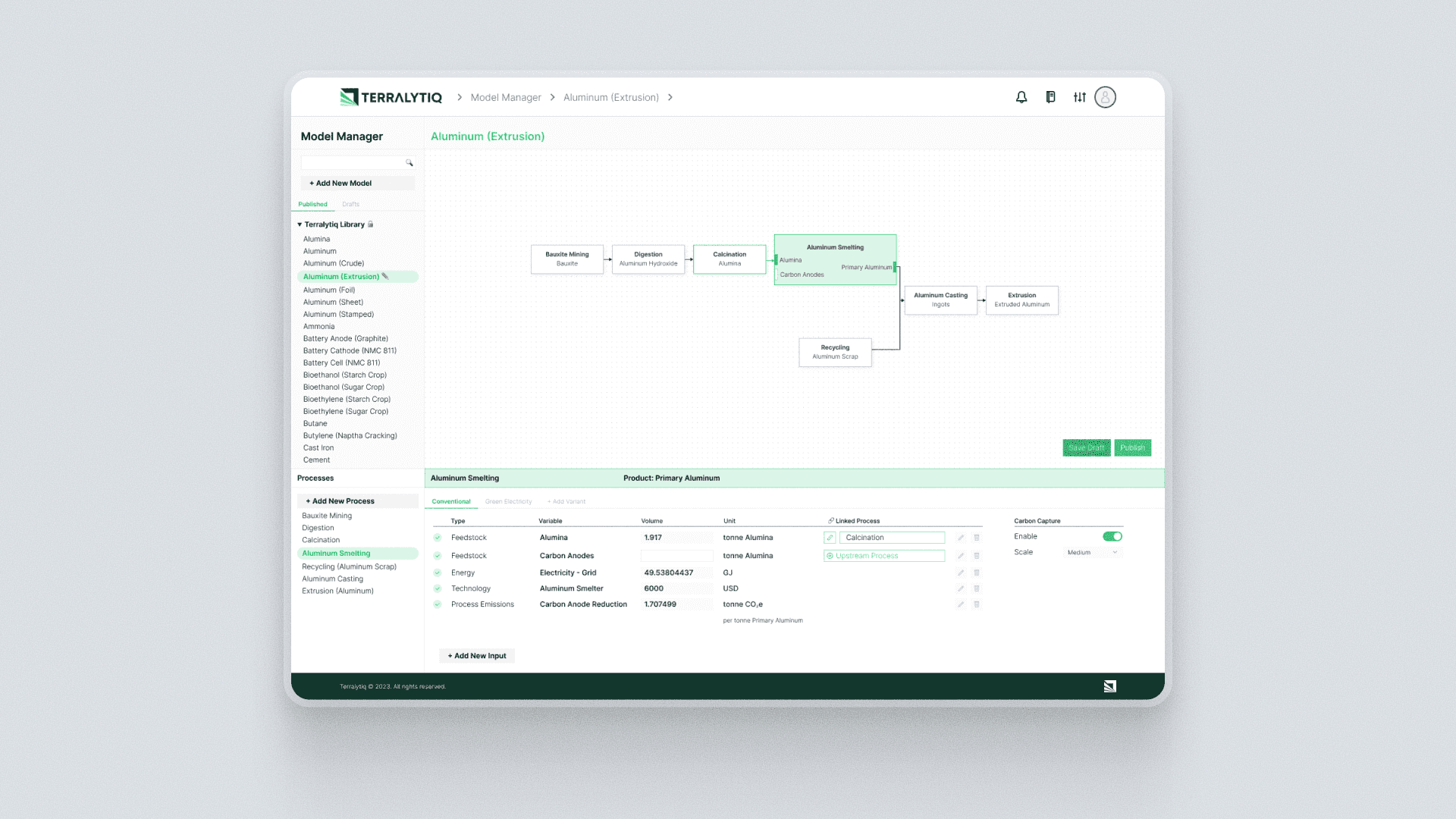
All of it fed into a complete end-to-end Service Blueprint: a working canvas we used across a series of client workshops to drive stakeholder alignment and specify the route forward. We then produced wireframes and designs for key moments in the future customer journey, making the strategic direction concrete enough to act on.
Throughout, we worked as an extension of Terralytiq's design team rather than separately from it. We reused their existing design assets, involved their Design Lead at every workshop stage, and took on the new strategic initiatives specifically to free them up to keep servicing live product work. This also meant the organisation had access to a neutral outside perspective on methods and best practices, and as their Design Lead noted, this gave their own voices more weight internally.


Impact
The most important finding was something the business hadn't fully seen: their suppliers were the strategic key.
Our mapping and workshop sessions surfaced critical bottlenecks and delays spanning immediate product fixes through to mid-term strategic readjustments. We identified nuances and dependencies in how manufacturers relate to their suppliers, a group that had previously been treated as peripheral to the product. The research made clear that suppliers were a make-or-break user group, and the product direction shifted accordingly.
The designs we created to facilitate manufacturer-supplier collaboration made the new direction tangible, and formed the foundation for a product Terralytiq could now take directly to manufacturers without needing a consultancy in the room to get there.
+2
Client leads in the newly targeted within a month of launch
Overview
Terralytiq had a strong platform and a dependency problem.
Built to support major management consultancies on their decarbonisation engagements, Terralytiq's product was delivering value but their ability to grow was tied to a third party. They asked us to reimagine the service and product for a direct route to manufacturing businesses, and to scope out what a GenAI decarbonisation co-pilot could genuinely look like in practice.
"It's not just advice and wisdom from years in the field of AI — it's hard artefacts that continue to anchor our product development months after the project: user research and synthesis, service blueprints, design frames. If you want someone to plug in and deliver rapid impact, MN are your guys."
Will Glazener, Co-Founder and COO, Terralytiq
Challenge
Moving from B2B2B to direct-to-manufacturer was a significant shift in operating model, process and end user experience.
Serving manufacturers directly means different pain points, different buying dynamics, and a different relationship with the platform entirely. The strategy needed to be rebuilt from evidence, not assumption. At the same time, Terralytiq already had a Design Lead and a live product roadmap. The work had to break new strategic ground without disrupting everything already in motion.
Approach
We started by mapping what the client already knew, then let the research challenge it.
Working directly with Terralytiq's COO and their Design Lead, we mapped the current customer journey alongside the team's existing assumptions about where the opportunities and pain points lay. From there, we ran customer and expert interviews to understand and prioritise friction across the manufacturer journey and gauge where GenAI-enabled functionality would have real traction and where it would be noise.
All of it fed into a complete end-to-end Service Blueprint: a working canvas we used across a series of client workshops to drive stakeholder alignment and specify the route forward. We then produced wireframes and designs for key moments in the future customer journey, making the strategic direction concrete enough to act on.
Throughout, we worked as an extension of Terralytiq's design team rather than separately from it. We reused their existing design assets, involved their Design Lead at every workshop stage, and took on the new strategic initiatives specifically to free them up to keep servicing live product work. This also meant the organisation had access to a neutral outside perspective on methods and best practices, and as their Design Lead noted, this gave their own voices more weight internally.
Impact
The most important finding was something the business hadn't fully seen: their suppliers were the strategic key.
Our mapping and workshop sessions surfaced critical bottlenecks and delays spanning immediate product fixes through to mid-term strategic readjustments. We identified nuances and dependencies in how manufacturers relate to their suppliers, a group that had previously been treated as peripheral to the product. The research made clear that suppliers were a make-or-break user group, and the product direction shifted accordingly.
The designs we created to facilitate manufacturer-supplier collaboration made the new direction tangible, and formed the foundation for a product Terralytiq could now take directly to manufacturers without needing a consultancy in the room to get there.
+2
Client leads in the newly targeted within a month of launch
Overview
Terralytiq had a strong platform and a dependency problem.
Built to support major management consultancies on their decarbonisation engagements, Terralytiq's product was delivering value but their ability to grow was tied to a third party. They asked us to reimagine the service and product for a direct route to manufacturing businesses, and to scope out what a GenAI decarbonisation co-pilot could genuinely look like in practice.
"It's not just advice and wisdom from years in the field of AI — it's hard artefacts that continue to anchor our product development months after the project: user research and synthesis, service blueprints, design frames. If you want someone to plug in and deliver rapid impact, MN are your guys."
Will Glazener, Co-Founder and COO, Terralytiq
Challenge
Moving from B2B2B to direct-to-manufacturer was a significant shift in operating model, process and end user experience.
Serving manufacturers directly means different pain points, different buying dynamics, and a different relationship with the platform entirely. The strategy needed to be rebuilt from evidence, not assumption. At the same time, Terralytiq already had a Design Lead and a live product roadmap. The work had to break new strategic ground without disrupting everything already in motion.
Approach
We started by mapping what the client already knew, then let the research challenge it.
Working directly with Terralytiq's COO and their Design Lead, we mapped the current customer journey alongside the team's existing assumptions about where the opportunities and pain points lay. From there, we ran customer and expert interviews to understand and prioritise friction across the manufacturer journey and gauge where GenAI-enabled functionality would have real traction and where it would be noise.
All of it fed into a complete end-to-end Service Blueprint: a working canvas we used across a series of client workshops to drive stakeholder alignment and specify the route forward. We then produced wireframes and designs for key moments in the future customer journey, making the strategic direction concrete enough to act on.
Throughout, we worked as an extension of Terralytiq's design team rather than separately from it. We reused their existing design assets, involved their Design Lead at every workshop stage, and took on the new strategic initiatives specifically to free them up to keep servicing live product work. This also meant the organisation had access to a neutral outside perspective on methods and best practices, and as their Design Lead noted, this gave their own voices more weight internally.
Impact
The most important finding was something the business hadn't fully seen: their suppliers were the strategic key.
Our mapping and workshop sessions surfaced critical bottlenecks and delays spanning immediate product fixes through to mid-term strategic readjustments. We identified nuances and dependencies in how manufacturers relate to their suppliers, a group that had previously been treated as peripheral to the product. The research made clear that suppliers were a make-or-break user group, and the product direction shifted accordingly.
The designs we created to facilitate manufacturer-supplier collaboration made the new direction tangible, and formed the foundation for a product Terralytiq could now take directly to manufacturers without needing a consultancy in the room to get there.