Invisible
Services
Product Design UX / UI Brand design Data Visualisation Design Strategy
Description
Bringing consistency to a fragmented product family, then building the AI tooling to keep it that way.
Services
Product Design UX / UI Brand design Data Visualisation Design Strategy
Description
Bringing consistency to a fragmented product family, then building the AI tooling to keep it that way.
Year
Timeline
12 weeks
Location
San Francisco, CA, USA
Overview
Invisible Technologies had a collection of successful products. What they lacked was a consistent way of
Years of siloed development across products and web platforms had produced a fragmented experience: different visual languages, different UX patterns, and no unified approach to how the brand showed up across design, data, and marketing. That fragmentation was starting to cost them. Cross-selling was harder. Integrations felt jarring. The brief was to fix it across UX, data visualisation, and marketing assets at the same time.

"We've had an amazing launch and the Mustard Navy team were absolutely instrumental to that."
Apurva Garware, Head of Product and UX
Challenge
Design debt at the brand level is harder to resolve than design debt in a single product.
The challenge was not limited to one team or one surface. Invisible Technologies' products, visualisations, and marketing assets had each evolved independently, and aligning them meant working across multiple teams who each had their own priorities and existing ways of working. Any solution also had to be practical enough to survive the engagement and scale without us.
Approach
We started with a shared vision, then embedded to make it real.
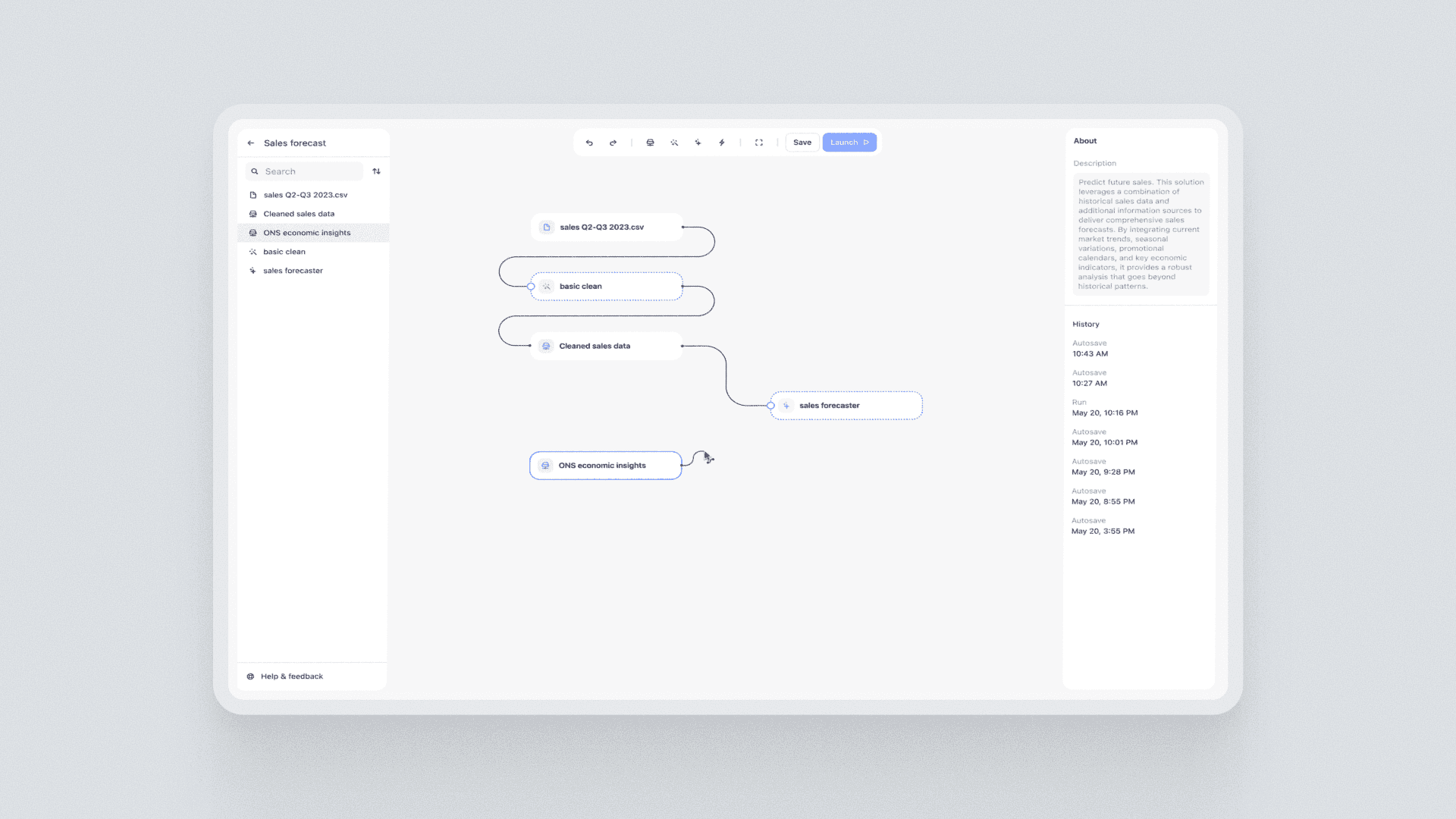
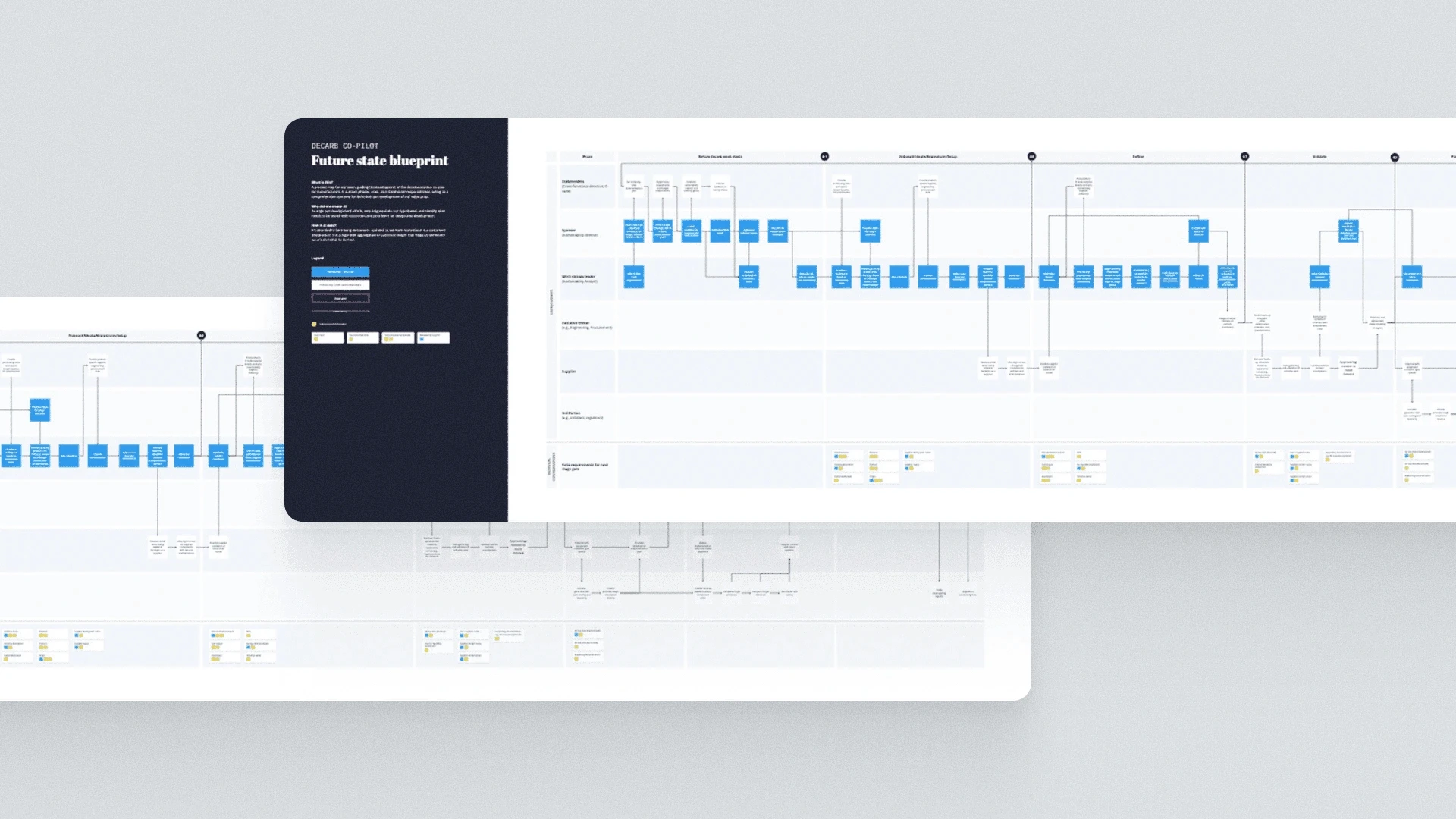
The first move was to create visual examples showing what an aligned, end-to-end experience could look like across the product portfolio. Having something concrete to react to changed the dynamic: teams that had been working independently got excited about working toward a common direction.
From there, we embedded directly in both the Product and Marketing teams to pressure-test the designs against real-world constraints. Working inside the teams, rather than handing work across a divide, meant we could make sure everything we produced was practical and easy to apply from day one.
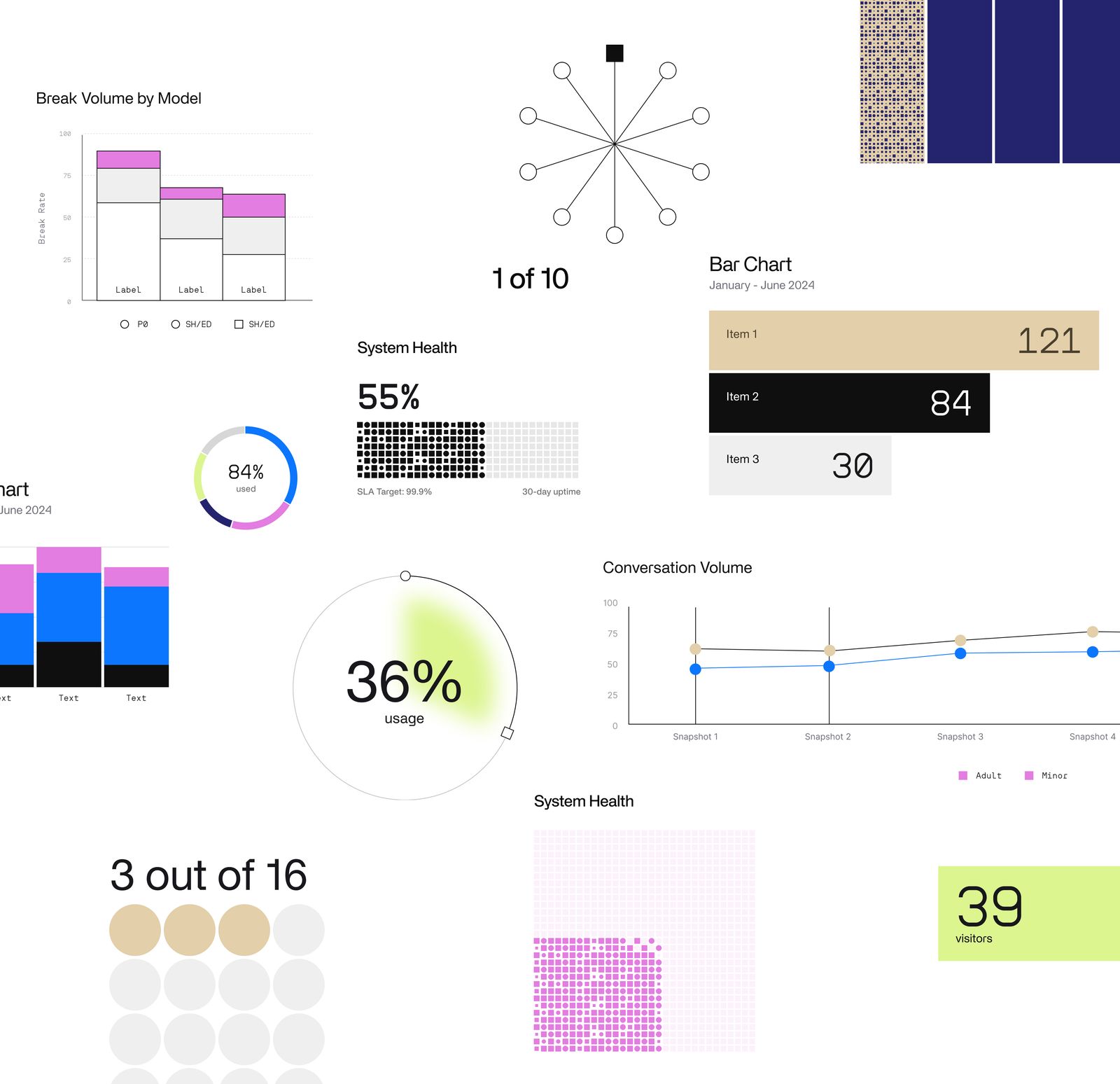
We also built something for after we left. Having created dozens of quality data visualisations ourselves, we used AI coding tools to build a custom Figma plugin that lets the Invisible Technologies design team generate new work in the same visual language we established. The engagement ended. The tooling kept accelerating the team.
Impact
A consistent product experience, a design system with real foundations, and a plugin that outlasted the project.
For the product teams, we delivered shareable UX foundations: design system components and data visualisation guides that gave everyone a common starting point going forward. With the Marketing team, we took those foundations into public-facing territory, producing visuals for the company website and promotional videos.
The Figma plugin was the part that lasted longest. By encoding the visual system into a tool the team can operate themselves, we gave Invisible Technologies a way to maintain consistency and keep producing at pace, without needing to bring us back in for every new piece of work.
Overview
Invisible Technologies had a collection of successful products. What they lacked was a consistent way of
Years of siloed development across products and web platforms had produced a fragmented experience: different visual languages, different UX patterns, and no unified approach to how the brand showed up across design, data, and marketing. That fragmentation was starting to cost them. Cross-selling was harder. Integrations felt jarring. The brief was to fix it across UX, data visualisation, and marketing assets at the same time.
"We've had an amazing launch and the Mustard Navy team were absolutely instrumental to that."
Apurva Garware, Head of Product and UX
Challenge
Design debt at the brand level is harder to resolve than design debt in a single product.
The challenge was not limited to one team or one surface. Invisible Technologies' products, visualisations, and marketing assets had each evolved independently, and aligning them meant working across multiple teams who each had their own priorities and existing ways of working. Any solution also had to be practical enough to survive the engagement and scale without us.
Approach
We started with a shared vision, then embedded to make it real.
The first move was to create visual examples showing what an aligned, end-to-end experience could look like across the product portfolio. Having something concrete to react to changed the dynamic: teams that had been working independently got excited about working toward a common direction.
From there, we embedded directly in both the Product and Marketing teams to pressure-test the designs against real-world constraints. Working inside the teams, rather than handing work across a divide, meant we could make sure everything we produced was practical and easy to apply from day one.
We also built something for after we left. Having created dozens of quality data visualisations ourselves, we used AI coding tools to build a custom Figma plugin that lets the Invisible Technologies design team generate new work in the same visual language we established. The engagement ended. The tooling kept accelerating the team.
Impact
A consistent product experience, a design system with real foundations, and a plugin that outlasted the project.
For the product teams, we delivered shareable UX foundations: design system components and data visualisation guides that gave everyone a common starting point going forward. With the Marketing team, we took those foundations into public-facing territory, producing visuals for the company website and promotional videos.
The Figma plugin was the part that lasted longest. By encoding the visual system into a tool the team can operate themselves, we gave Invisible Technologies a way to maintain consistency and keep producing at pace, without needing to bring us back in for every new piece of work.
Overview
Invisible Technologies had a collection of successful products. What they lacked was a consistent way of
Years of siloed development across products and web platforms had produced a fragmented experience: different visual languages, different UX patterns, and no unified approach to how the brand showed up across design, data, and marketing. That fragmentation was starting to cost them. Cross-selling was harder. Integrations felt jarring. The brief was to fix it across UX, data visualisation, and marketing assets at the same time.
"We've had an amazing launch and the Mustard Navy team were absolutely instrumental to that."
Apurva Garware, Head of Product and UX
Challenge
Design debt at the brand level is harder to resolve than design debt in a single product.
The challenge was not limited to one team or one surface. Invisible Technologies' products, visualisations, and marketing assets had each evolved independently, and aligning them meant working across multiple teams who each had their own priorities and existing ways of working. Any solution also had to be practical enough to survive the engagement and scale without us.
Approach
We started with a shared vision, then embedded to make it real.
The first move was to create visual examples showing what an aligned, end-to-end experience could look like across the product portfolio. Having something concrete to react to changed the dynamic: teams that had been working independently got excited about working toward a common direction.
From there, we embedded directly in both the Product and Marketing teams to pressure-test the designs against real-world constraints. Working inside the teams, rather than handing work across a divide, meant we could make sure everything we produced was practical and easy to apply from day one.
We also built something for after we left. Having created dozens of quality data visualisations ourselves, we used AI coding tools to build a custom Figma plugin that lets the Invisible Technologies design team generate new work in the same visual language we established. The engagement ended. The tooling kept accelerating the team.
Impact
A consistent product experience, a design system with real foundations, and a plugin that outlasted the project.
For the product teams, we delivered shareable UX foundations: design system components and data visualisation guides that gave everyone a common starting point going forward. With the Marketing team, we took those foundations into public-facing territory, producing visuals for the company website and promotional videos.
The Figma plugin was the part that lasted longest. By encoding the visual system into a tool the team can operate themselves, we gave Invisible Technologies a way to maintain consistency and keep producing at pace, without needing to bring us back in for every new piece of work.